Ambon – Seram Birdwatching & Photography
A High-End Endemic Birding Experience in the Moluccas
The islands of Ambon and Seram form one of the most important birding corridors in the Moluccas region. Despite their relative proximity, each island supports distinct ecological zones and endemic bird species, making the Ambon–Seram combination exceptionally productive for serious birdwatchers and wildlife photographers.
This destination is defined not by quantity alone, but by quality — rare endemics, strong evolutionary significance, and field conditions that reward skilled observation.
Iconic and Endemic Birds of Ambon and Seram
Seram, as the largest island in Moluccas, hosts some of the region’s most celebrated endemic birds. Ambon, while smaller, offers strategic access to several highly localized species and serves as a practical base for exploration.
Key target species include:
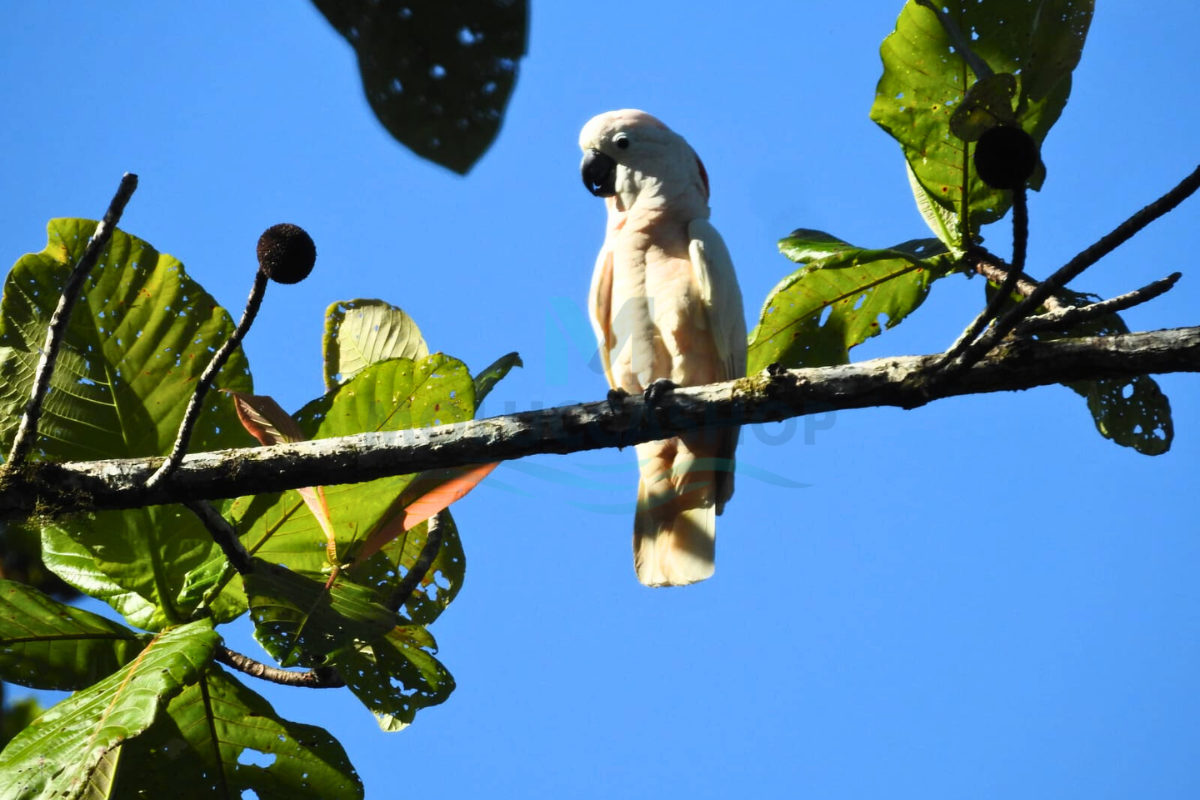
- Salmon-crested Cockatoo (Cacatua moluccensis) — the undisputed flagship species of Seram
- Purple-naped Lory (Lorius domicella)
- Red Lory (Eos bornea)
- Moluccan King Parrot (Alisterus amboinensis)
- Pygmy Parrot (Micropsitta sp.)
- Lazuli Kingfisher (Todiramphus lazuli)
- Blue-eared Lory (Eos semilarvata)
- Seram White-eye (Zosterops stalkeri)
- Southern Cassowary (Casuarius casuarius)
- Cinnamon-crested Flycatcher (Monarcha cinerascens)
- Seram Fantail (Rhipidura dedemi)
- Seram Thrush (Geokichla joiceyi) — one of the rarest thrushes in Indonesia
- Seram Friarbird (Philemon subcorniculatus)
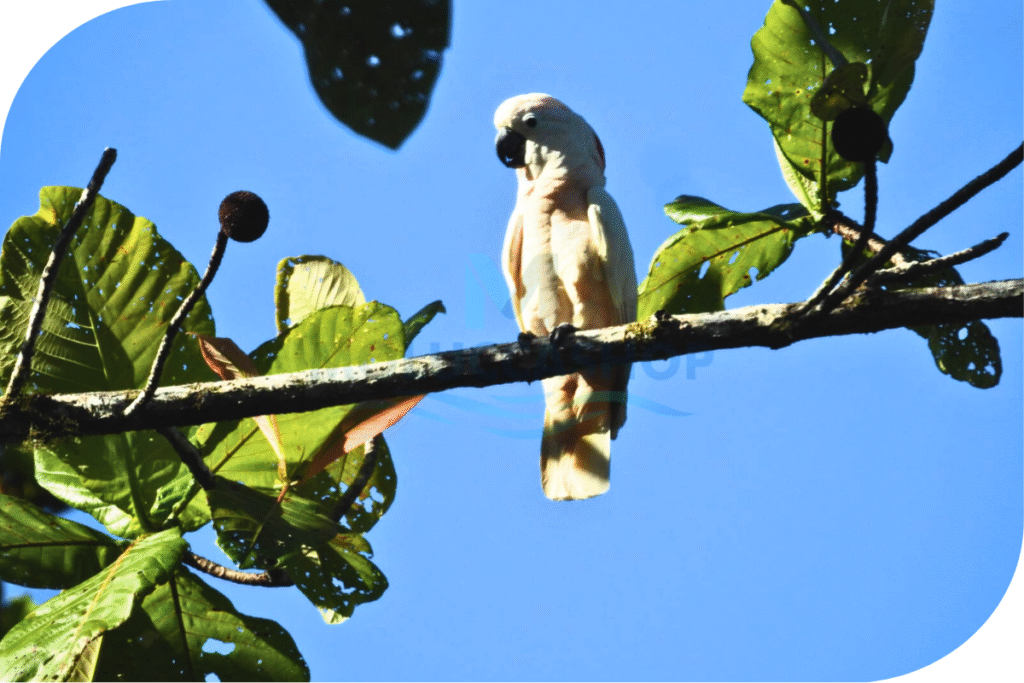
MoluccasHop – “Salmon-crested Cockatoo (The Iconic Birds of the Ambon – Seram)”
Together, these species represent a core wish-list for birders focused on Moluccas endemism rather than general Southeast Asian birding. This combination of parrots, kingfishers, and forest specialists makes Ambon–Seram one of the most rewarding endemic-focused birding destinations in Indonesia.
The Iconic Bird of Ambon – Seram:
Salmon-crested Cockatoo (Cacatua moluccensis)
This species is the flagship bird of Seram and one of the most iconic parrots in the world.
The Salmon-crested Cockatoo is endemic to Seram and nearby islands and is immediately recognizable by its large size, pale plumage, and dramatic salmon-pink crest. Its strong vocal presence, social behavior, and visibility in forested landscapes make it both a symbol of Seram’s biodiversity and a focal point for conservation.
From a birdwatching perspective, it is a primary target species. From a conservation perspective, it is globally significant, often cited in discussions about habitat protection and sustainable wildlife tourism in Moluccas.
Photographically, few birds in Indonesia offer the same impact — especially when observed in natural forest settings rather than captivity.
Manusela National Park: The Heart of Seram Endemism
Manusela National Park is the primary stronghold for Seram’s endemic birds. Its extensive forest coverage, ranging from lowland to montane zones, supports a full altitudinal gradient of species.
Birding within Manusela emphasizes early-morning forest activity, when cockatoos, parrots, and forest passerines are most active. The park is particularly important for observing natural flock dynamics and vocal behavior, critical for species such as Seram Thrush and Seram Friarbird.
For photographers, the park’s layered forest structure and filtered light create ideal conditions for natural, ethical wildlife imagery.
Ambon Island: Access, Specialties, and Supporting Species
While Ambon is often viewed primarily as a transit point, it offers valuable birding opportunities in its own right. Secondary forests and forest edges provide access to species such as the Moluccan King Parrot and Purple-naped Lory, often at relatively close range.
Ambon also allows birdwatchers to acclimate to Moluccas’s avifauna, vocal patterns, and field conditions before entering the more demanding forests of Seram.
A Photographer’s Perspective
Ambon–Seram offers strong photographic potential, particularly for large parrots and cockatoos. The combination of open forest structure in certain areas and cooperative species behavior allows for clean compositions without artificial intervention.
Patience and timing are rewarded with images that reflect natural behavior — feeding, calling, and interaction — rather than staged encounters.
Conservation and Responsible Birding
Birdwatching and photography activities in Ambon and Seram are conducted with respect for wildlife and local communities. Local guides play a critical role in identifying species, protecting sensitive habitats, and ensuring ethical field practices.
Participation in responsible birding tourism supports conservation awareness and reinforces the value of preserving Seram’s remaining forests.
Best Time to Visit Ambon and Seram
The optimal birding season runs from May to October, when weather conditions are more stable and bird activity remains high across elevation zones.
Typical itineraries last 5–6 days, allowing sufficient time to explore Manusela National Park on Seram while incorporating supporting birding sessions on Ambon.
Why Ambon – Seram Matters to Serious Birdwatchers
Among birdwatchers familiar with Wallacea, Ambon–Seram is not evaluated by sheer species numbers, but by the presence of true endemics with restricted ranges and strong evolutionary significance. The Salmon-crested Cockatoo alone places Seram among Indonesia’s most important islands for parrot conservation, while species such as Seram Thrush, Seram Fantail, and Seram Myzomela reinforce its status as a destination for focused, high-value birding rather than casual observation.
For experienced birdwatchers, Ambon–Seram represents a place where field knowledge, patience, and careful listening are rewarded — a benchmark of a serious birding destination.
Begin Your Ambon – Seram Birding Experience
Ambon – Seram Birdwatching & Photography is designed for birders and photographers who value depth, authenticity, and endemic-focused exploration.
Here, each sighting contributes to a broader understanding of Moluccas’s unique evolutionary history — and each journey supports the conservation of one of Indonesia’s most important avian regions.